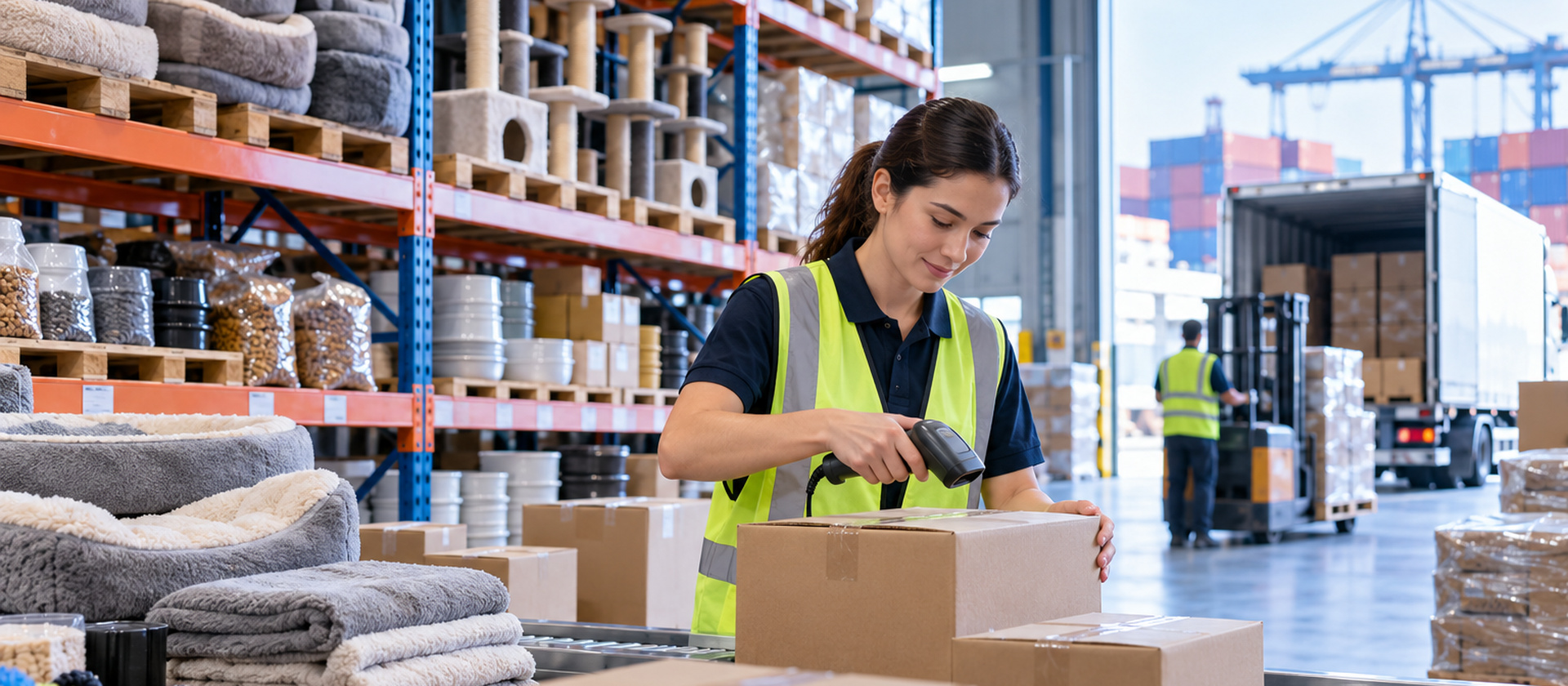
Pet products are tricky for logistics. Dog food, cat trees, pet crates and large beds are heavy or bulky; dimensional weight easily pushes up shipping fees. Slow delivery also hurts conversion, especially when shoppers are used to fast local delivery.
Optimize Packaging Design
Right-size boxes to cut dimensional weight charges. Add protective foam only where necessary. For collapsible pet items, use compressed packaging to reduce volume. Over-packaging directly raises shipping cost and carbon footprint.
Split Your Fulfillment Model
For hot-selling small accessories, stock them in local 3PL warehouses in your target country. This cuts delivery time to 2–5 days and greatly improves customer satisfaction. For large, low-turnover furniture such as cat trees, use direct shipping from overseas factories or pre-order mode.
Compare Shipping Lines Carefully
Sea freight works for bulk replenishment of core SKUs, while air freight is suitable for urgent restocks. For dropshipping orders, pick reliable lines with full tracking instead of ultra-cheap unstable routes. Lost packages and long transit times bring more support workload than saved shipping money.
Prepare a Clear Return Plan
Pet returns are common because of size mismatch, chewing damage or wrong color. Work with your fulfillment provider to handle local returns efficiently.
Logistics is part of your supply chain experience. When you control delivery speed and shipping cost well, your independent store can compete better with big marketplaces.